
Can Double-Pane Windows with LoE-i89 Match Triple-Pane Performance?
Introduction
When choosing energy-efficient windows, homeowners often wonder whether triple-pane windows are worth the additional investment. However, modern glass technology offers another option: improving the thermal performance of double glass window with advanced Low-E coatings.
By combining LoE-180 with LoE-i89, a double-pane window can achieve thermal performance comparable to certain triple-pane configurations. This article compares three window options offered by Urex Windows and Doors, explains their performance ratings, and discusses an important consideration: sound insulation.
1. Double-Pane vs. Triple-Pane Windows
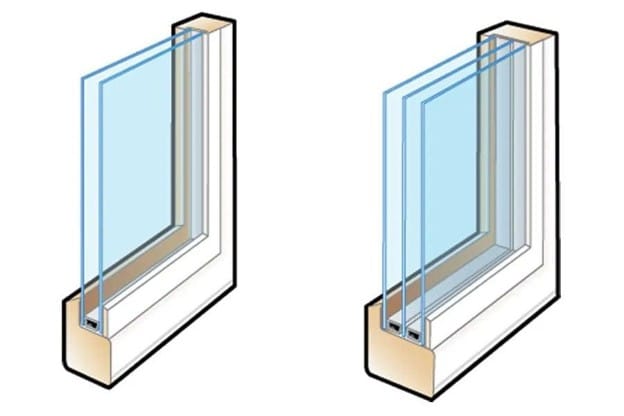
A double-pane window consists of two glass panes separated by an insulating space, commonly filled with air or argon gas. These double glass window panes create an insulating barrier that helps reduce heat transfer between the interior and exterior of a home.
In comparison, triple-pane windows contain three glass panes and two insulating spaces, providing additional potential for reducing heat transfer. These are also commonly referred to as three pane windows or triple glazed windows.
Double-pane windows generally offer a practical balance of energy efficiency, weight, and cost. For homeowners considering window replacement in Calgary, choosing the right double-pane or triple-pane configuration can make a significant difference in long-term comfort and energy savings. Learn more about our window replacement services in Calgary and explore the options available for your home.
Triple-pane windows can provide excellent insulation, particularly in cold climates, but their performance depends on the complete window design.
The number of glass panes is important, but coatings, gas fill, spacers, frames, and installation quality also influence overall performance.
2. How Low-E Coatings Improve Energy Efficiency
Low-E (low-emissivity) coatings are microscopically thin layers applied to glass to help control heat transfer.
- LoE-180: Allows relatively high solar heat gain while improving thermal insulation.
- LoE-366: Provides greater solar control by reducing unwanted solar heat gain.
- LoE-i89: A room-side coating designed to reflect infrared heat back into the living space, helping reduce heat loss during colder months.
The appropriate coating depends on climate, window orientation, daylight preferences, and heating and cooling requirements.
3. How LoE-i89 Enhances Double-Pane Windows
LoE-i89 can improve the insulating performance of a compatible double-pane glass unit without adding a third pane.
Its main benefits include reduced heat transfer through the glass, improved winter comfort near windows, and the potential to achieve thermal performance comparable to certain triple-pane products.
For homeowners in cold climates, this can be an attractive alternative to upgrading to a three-pane configuration. In particular, an argon double pane windows configuration combined with advanced Low-E coatings can provide an effective solution for improving thermal efficiency.
However, the actual results depend on the complete window specifications.
4. How to Improve Double-Pane Window Performance
To get the best results from a double-pane window, consider these factors:
- Low-E coatings: Choose a suitable combination, such as LoE-180 with LoE-i89, based on your home’s needs.
- Argon gas fill: Argon can reduce heat transfer between the panes.
- Quality spacers: Warm-edge spacers can help reduce heat loss around the glass edges.
- Insulated frames and proper installation: The frame, seals, and installation all contribute to whole-window performance.
Evaluating these components together is more useful than comparing glass panes alone.
5. Understanding Window Performance Ratings
Three measurements help homeowners compare energy-efficient windows.
- U-factor: Measures heat transfer through a window. A lower value indicates better insulation.
- Solar Heat Gain Coefficient (SHGC): Measures how much solar heat enters through the window. The ideal value depends on climate and window orientation.
- Energy Rating (ER): A Canadian performance rating that accounts for factors including heat transfer, solar heat gain, and air leakage. A higher rating generally indicates better energy performance under the rating system.
Always compare equivalent ratings and verify whether the figures apply to the glass unit or the complete window.
6. Comparing Urex Windows and Doors Configurations
The following comparison is based on the product specifications provided by Urex Windows and Doors for the three window configurations shown below.
Window configuration | U-factor | SHGC | VT | ER |
Double-pane with LoE-180 + Clear | 0.27 | 0.48 | 0.53 | 34 |
Double-pane with LoE-180 + LoE-i89 | 0.23 | 0.44 | 0.52 | 36 |
Triple-pane configuration 180+clear+clear | 0.22 | 0.41 | 0.48 | 36 |
Note: Figures are transcribed from the supplied Urex Windows and Doors quote. Confirm units, certification, and testing conditions with the manufacturer.
In this comparison, adding LoE-i89 improves the listed U-factor from 0.27 to 0.23 and increases the Energy Rating from 34 to 36. The triple-pane option has a listed U-factor of 0.22 and an ER of 36.
These figures demonstrate that the upgraded double-pane configuration comes close to the triple-pane option in the listed thermal performance ratings. They apply to these specific Urex configurations and should not be interpreted as a universal comparison of all windows.
7. What About Sound Insulation?
Although LoE-i89 can improve thermal efficiency, it does not provide the additional glass pane and insulating space found in a triple-pane window.
Triple-pane windows may offer improved sound reduction in some configurations. However, acoustic performance also depends on glass thickness, differences in pane thickness, spacing, laminated glass, frame construction, and installation quality.
If reducing traffic noise or other outdoor sounds is a priority, compare the acoustic performance of the specific products rather than relying on pane count alone.
Homeowners considering double pane window glass replacement or dual pane window glass replacement should also consider the condition and specifications of the existing window. Replacing the glass unit may improve certain performance characteristics, depending on the window frame, available glass configurations, and compatibility.
The key distinction: LoE-i89 improves thermal performance; it does not automatically bring a double-pane window’s sound insulation to the level of a triple-pane window.
Conclusion
A high-performance double-pane window with LoE-180 and LoE-i89 can be an effective option for homeowners seeking better insulation without moving to a triple-pane configuration.
Based on the specifications supplied by Urex Windows and Doors, the upgraded double-pane option approaches the listed thermal performance of the compared triple-pane product. However, sound insulation and other performance characteristics must be evaluated separately.
The best choice depends on your climate, budget, comfort priorities, and verified whole-window ratings. Comparing the actual products side by side is the most reliable way to determine which option offers the right balance of energy efficiency and value for your home.
Looking to upgrade your home’s windows? Explore our energy-efficient window solutions and book your free in-home estimate with UREX Windows and Doors.
